How elevated is your pitch?

Kimberly_DavisDuring the Apprentice Kim and her Marketing Masters Series, one of the things that stood out from an excellent day was the importance of an effective elevator pitch. The ability to summarize your business in 15 seconds is not easy, so important.

This is something I have mentioned several times before, including How good is your Escalator Pitch?

Kim asked the audience for examples of their elevator pitches, and although some were ok, they all paled into insignificance compared to her own pitch for her business Sarsaparilla Ltd. I didn’t manage to catch it word for word, but it went something like this;

Hello my name is is Kimberly Davis and I am the founder of Sarsaparilla a marketing consulting and training agency which can detox your marketing by protecting companies from Flash, Fluff, and Fakers. It specialises in helping you increase profits, maximise return on investment, and measure results.

It’s close to perfect, as it is concise, clear, explains the benefits, and leaves you wanting to know more.

Many entrepreneurs make the mistake of trying to explain everything they do, but then leave the potential customer to work out how they would benefit from the product or service.

Fortunately there are plenty of sources on the web to help write your own perfect pitch.

5-rules-for-writing-an-exceptional-elevator-pitch from the Small Fuel Marketing blog.

1. Explain your business in two lines
You have only a moment to explain what you do, but it can be hard to pare down an explanation to the details. Try starting with only a minimal explanation of just two lines. Focus on writing down what is unique about your business. You don’t need a perfectly formatted document; this draft is to get you to eliminate unnecessary words.

While you should mention what you do, how your business helps is actually more important than your particular methods. A professional speaker, for instance, wouldn’t just say that he gets up on a stage and talks. Instead, his pitch might include an explanation of the fact that he motivates employees to focus on quality — or whatever his speaking is supposed to achieve.

2. Add some excitement
If you aren’t excited about what you do, there’s no reason anyone else should get excited either. There was some sort of passion that lead you to get involved with your business; let it show through. In some cases, your reasons may be your elevator pitch.

Do you see a particular need for your services? Focus on that need, and a passionate pitch might just write itself. Results are another easy way to get excited about your business. Think about the numbers you celebrate — the milestones for your business.

3. Test your pitch
Find a few people that will listen to your pitch and give you feedback. Ask them what terms they didn’t recognize, where it was boring and where it was exciting.

Your listeners’ questions about your pitch are especially important. You don’t necessarily want to answer every question about your business in your pitch — getting prospective customers to ask a few questions is a great way to hook them — but if a test subject has no idea what you do after listening to your pitch, it’s back to the drawing board. It may take a couple of tries to come up with a pitch if your business isn’t particularly common.

4. Adapt to the situation
You don’t give your elevator pitch in a vacuum. It’s always part of a conversation. Your conversational partner probably has some specific needs that your company can help with — and he or she may have already described them as part of the conversation.

If you’ve already heard those specific needs, respond to them. Tell your listener exactly what you can do to help him; being specific is what can take an elevator pitch from the “I’ll be in touch” level to the “I’m calling you first when I get back to the office” level.

5. Be open to change
I actually learned this trick during a high school science fair: I was giving a pitch about my project to a judge and he asked a couple of questions that seemed pretty important. I started incorporating his questions, along with the answers, in my pitch. I’m pretty sure that it was that small change to my pitch that landed me a prize.

Your elevator pitch is not carved in stone. If you come across a better explanation of what you do, you ought to include it in your pitch. It’s even worthwhile to test out multiple versions of your elevator pitch and make changes based on the result. And if your business changes, it’s important to make sure that your elevator pitch reflects those changes.

15 Second Pitch uses a simple wizard to help you generate your 300 word pitch. It also has access to 14,000 sample pitches, so you can learn from others like this;
My name is Corey Lennox and I am a musician specializing in writing mindblowing songs. I write rock music to crystallize some of life’s most amazing moments and experiences. I’m a Berklee College of Music graduate who puts emotion first in his music. Check out what I’ve been creating- all my music is available for free. If you like what you hear, I encourage you to join my mailing list, or even just say hello!




Apprentice Kim and her Marketing Masters Series

Kimberly_DavisLast week I was fortunate enough to attend the first of Kimberly Davis‘ (a contestant on the 2009 series of the Apprentice), Marketing Masters Series.

The day on Marketing Foundations was an excellent overview of how to market and promote your business, and ended with an inspiring talk from author and motivational speaker, Brad (Get Off Your Arse) Burton.

Here are my notes from the day:

Marketing Masters Series – Marketing Foundations – Tuesday 18 January 2011, London

Definition
–    The external perception of your company
–    Anything and everything your company does

Difference between sales and marketing
–    Marketing is long-term and has a slow build
–    Sales is short-term is about converting interest into sales
–    The Ying and Yang of business – requires different personality types

The Marketing Umbrella

1. Research
2. Branding – the promise you make to your customers
3. Writing and editing
4. Develop the perfect elevator pitch
5. PR vs Advertising
6. Mailshots
7. Print and production
8. Merchandising
9.  Events and promotions
10. Sponsorship and Partners
11. Online Marketing
12. Video and Multimedia
13. Social Media – How can social media help my business?
14. Customer Service
15. Create a Marketing Plan
16. Create a System that helps your business – e.g. Event booking, emailing
17. Put together your dream team
18. Get professional advice from someone who has done it
19. Network
20. Measure, measure, measure

Example of a very expensive mistake
–    Don’t cut marketing spend as it is a false economy
–    Don’t try and do everything yourself
–    You need to invest in your business – are you investing in holidays?
–    If you don’t have the time to do it right, then you must have the time to do it over again
–    Compare the cost of doing to the cost of not doing
–    You must be willing to make a financial commitment to your business

The growing grey market in the UK

Retired man on bench
Photo Walter Groesel - Stock.XCHNG

Last night I attended a packed Insider Trends’ talk at the Business & IP Centre. Last time the topic was How to become a cutting-edge retailer, but this time Cate Trotter the founder and Head of Trends was talking about the rise and neglecting of the over 50’s market.

As a newly minted 50+ myself (well last September anyway), I was doubly interested in what Kate had to say, and was pleasantly surprised to hear that by 2020 the over 50’s will form the majority of Britain’s population. So that makes me part of the only growth market in the UK.

Once again Kate provided an excellent talk, and left the audience pumped full of relevant statistics and marketing angles.

Here are my notes from the evening:

Untapped markets: The grey pound – Monday 24 January

Profile Marketing Opportunities

–    The population in the UK is getting older, already more +60s than -16s
–    People are living longer
–    Family sizes are shrinking
–    Number of 90 year olds expected to double in 25 years
–    78% of income retained post retirement, but loss in commuting and mortgage costs increase available money
–    +65’s spending £100 billion a year Recession
–    Older customers are better prepared for economic decline than younger
–    Many are working part-time to bring in an income Segmentation
–    Important part of understanding your customers
–    Need to add more age categories. 50-65 and 65+ are not enough
–    Need to be aware of not pigeon-hole by age – much more diverse than the younger categories, due to widely varying life experiences

–    So use lifestyle segmentation instead

  • Live Wires – active and working, many interests, technology aware, spend on holidays
  • Happy and fulfilled – active, but more traditional, financially well off, lots of holidays, spend on quality traditional brands
  • Super troopers – often have lost a spouse, don’t like advertising and new technology
  • Living day to day – spends rather than saves, more interested in material wealth than time, tend to choose premium brands
  • Unfulfilled dreamers – hard working, dreams of un-achieved ambitions,
  • Rat race junkies – could retire, but not yet, into technology, more than one marriage

–    Need to be aware of sets of baby-boomers coming through

  • Flower-children are now approaching their mid 60s
  • So interested in green such as Prius cars and green funerals
  • Believe that old age starts at 72, not 65
  • More old travellers going further afield and more adventurous
  • The SKIers – Spending Kids Inheritance

Adapting your business
–    Attitudes, physical (eyesight) and cognitive (memory) impairments
–    Over 50’s buy 80% of top of the range cars (BBC news report)
–    But many have enough mainstream products (washing machine, microwave, TV). However, they might upgrade at point of retirement with help of lump sum
–    From products to services – or service related products (e.g. sport) less equipment for the home
–    Travel

  • Generally continues until late 70’s and early 80’s
  • GrandTravellers – grandparents and their grandchildren on holiday together – something relatively new and growing
  • Travel gripes – single supplements, insurance costs, active sports insurance

–    Clothes

  • Comfortable and cool clothes lacking in the market place
  • A younger style, but to fit an older shape
  • Children’s toys and clothes as presents

–    The Home

  • Home improvement rather than new products
  • B&Q
  • Employing independent traders + reputable traders marketed towards an older customer
  • Ergonomic tools (SandBug from B&Q)
  • Packaging older people can open – %80 are not – Primelife President
  • Smaller packs and designs – one person teapots (Debenhams small wok a bestseller)

–    Home health care

  • Philips Defibrillator – talks you through
  • Retrofit-friendly homes you can grow old in – e.g. doors wide enough for a wheelchair, room for safety handles – Joseph Rowntree Foundation – www.lifetimehomes.co.uk

–    Fitness

  • Pensioners are fastest growing group of gym members
  • Scope for specialist centres
  • Zumba – very popular with older dancers

Design

–    Product and service design, also websites and fixtures and fittings
–    A lack of interest in older consumers from mainstream companies
–    Specialist

  • Simplicity computers – replaces Microsoft Windows with 6 buttons – option to pay by cheque in the post
  • Tesco online shopping has an access setting
  • Photostroller – purpose built controller to access Flickr content
  • PostEgram – a Facebook app for printing out content
  • Presto – an Internet printer with a remote control system for the sender – customer doesn’t need a computer
  • Kaiser’s in Austria – e.g. easy to reach stock, reduced glare lighting, slip-proof flooring, pleasant places to sit, reading glasses to borrow, all employers over 50 – sales 50% above forecast
  • Odeon Senior Screen – with different snacks – coffee and cake instead of fiz and popcorn
  • Danger of alienating older customers who still feel young – if they can reject it, they often do – don’t want to be associated with ‘that group of people’ – they expect products and service to cost more

–    Inclusive

  • Kindle – allows you change size of text and have text to speech
  • Nintedo Wii is becoming more popular in care homes – active game playing
  • ClearRX by Target in the US – simplifies medication for entire families
  • Ferrari Enzo – with wider doors and lower floor o    Harley-Davidson – trikes for the older market – still cool design
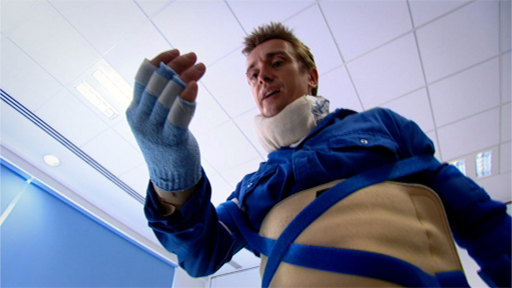
  • Mobilistrictor – a suit to age the wearer by 40 years – useful to test our store design etc
    – used by Ford when developing the Focus – e.g. boot has no lip, dash doesn’t reflect light – became Ford’s best selling car
    – used by Derby City General Hospital building design
    – General Motors used older engineers – key card and push button start
mobilistrictor_Richard_Hammond
Richard Hammond trying out the Mobilistrictor
  • Legibility of writing
    – Larger fonts
    – Bolder colours
    – Clearer typfaces eg Tireseais typeface
    – Use of icons and symbols
  • Interface design – e.g. Apple iPhone and iPad, Facebook (103 year old woman who uses an iPad to interact)
    – Additional advantage of extended appeal to disabled, parents of young children, those heavily laden – e.g. small trolley in supermarket
    – Involve audience in your designs

Marketing

–    Only 1 in 5 sticks to brands they now – happy to try new products and service, but as late adopters
–    Only 1 in 3 own a mobile phone
–    Less influenced by mass media as advertising does not reflect their interests, have become cynical, but not being wired, are more open to national and local marketing
–    More time to shop around – and more time to think if they really need it, so more critical, and more time to write reviews. Can become experts in new products
–    More time to tell their friends about products and services – word of mouth becomes even more important
–    Need to use younger (not too young) faces in images – or take out faces – e.g iPad just shows hands, so appeals to all ages
–    Retail and experiential – e.g. Harley Davidson stores – older are less likely to buy online
–    Only 1 in 4 over 65’s have used the internet, but this is growing very fast
–    Over 50’s represent 25% of online population, but those that are spend longer online
–    Silversurfersday – increase confidence
–    Raceonline2012 led by Martha Lane Fox from LastMinute.com – can buy a £99 computer, with a cheap wireless dongle from 3
–    Better designed websites – e.g. Jitterbug from Samsung aimed at older customers, who can call to order as well as online
–    Email marketing more effective with older customers – e.g. eldergym newsletter
–    Free magazines – e.g. Staysure magazine for the over 50’s – based on airline magazine model
–    Segmented approaches – e.g. Ninento DS using Girls Aloud and Julie Walters in different ads for the same product
–    Car adverts tailored to age group. E.g. the young are interested in loans, the older are not
–    Appealing to the adult child
–    Look for older people in marketing agencies, if you can find them.
–    Be aware of emotional issues associated to buying older products such as walking sticks or elasticized trousers

Conclusion
–    They represent the only growing market in the UK
–    They have time and money to spend
–    There is currently very little competition
–    Be aware that they are difficult to profile – very varied with more variety in the future

Approach requires
–    empathy
–    must not be patronising

Comedy at The British Library – What’s So Funny Live

It’s Friday and so time to lighten up a bit.

Actually it was on Monday evening that I was lucky enough to attend What’s So Funny Live, an evening of comedy as part of our Evolving English exhibition.

Five comics took over our rather serious Conference Centre with the challenge of making their audience laugh.

Each of them succeeded in their own way, with Ida Barr being particularly – or perhaps peculiarly, unique.

Doc Brown the rapper and performance poet-turned comedian (who prefers not to be known as the baby brother of author Zadie Smith), was the host for the evening, and contributed some excellent laid back humour. In particular his story about listening to his ‘brothers’ outraged tales of police harassment as they go about their illegal activities.

Susan Murray focussed on regional accents with some self deprecating jokes about the unimpressive nature of her West Midlands accent.

Old timer Arthur Smith followed with sketches about how everyone will eventually become a BBC Radio 4 listener – however hard they try to resist (certainly true for me). He also persuaded the audience to sing along to “I am the Mayor of Balham / oh yes I fucking am / I am the Mayor of Balham / I fucking fucking am”. Taking much delight in polluting the otherwise pristine air of  the British Library with foul language. However, he finished on a joke that was so clean it would be suitable for children and involved balloons and letting people down.

Next came Ida Barr, the creation of Chris Green. She is an ‘artificial-hip-hopping’ former Music Hall star, doddering around the stage but peppering her talk with the street language of ‘innit’ and ‘aks’. Odd, but also hilarious.

[youtube=http://www.youtube.com/watch?v=rPXNU2LZBHA&feature=player_embedded#!]

Finally came Richard Herring, famous (or perhaps infamous) for his 2009 show Hitler Moustache, in which he attempted to reclaim the toothbrush moustache for comedy… by growing one on his upper lip. He was enormously relaxed and confident with the audience, and has a great deal of excellent material to call on. He successfully unnerved us as well as making us laugh at ourselves and him. He has a great sketch about the potato of the sky…

[youtube=http://www.youtube.com/watch?v=6Iu7dfHhaHA]


Cool infographics that tell a story

Although I have never really believed in the old cliché a picture is worth a thousand words, I have been a big fan of effective illustrations for many years.

I started with the seminal works The Visual Display of Quantitative Information and Envisioning Information by statistician and sculptor, Edward Tufte. Although, I have to say I was always somewhat underwhelmed by his examples.

Thanks to a recent BBC series on The Beauty of Diagrams, I discovered that Florence Nightingale (who is best known as the nurse who cared for thousands of soldiers during the Crimean War), was the first to use statistical graphics as to illustrate the causes of mortality.

More recently I have discovered the Cool Infographics blog, and have seen some excellent examples of effective presentations of statistical information.

The Conversation Prism 3.0 for 2010 shows  the major players in each of 28 different online conversation categories.

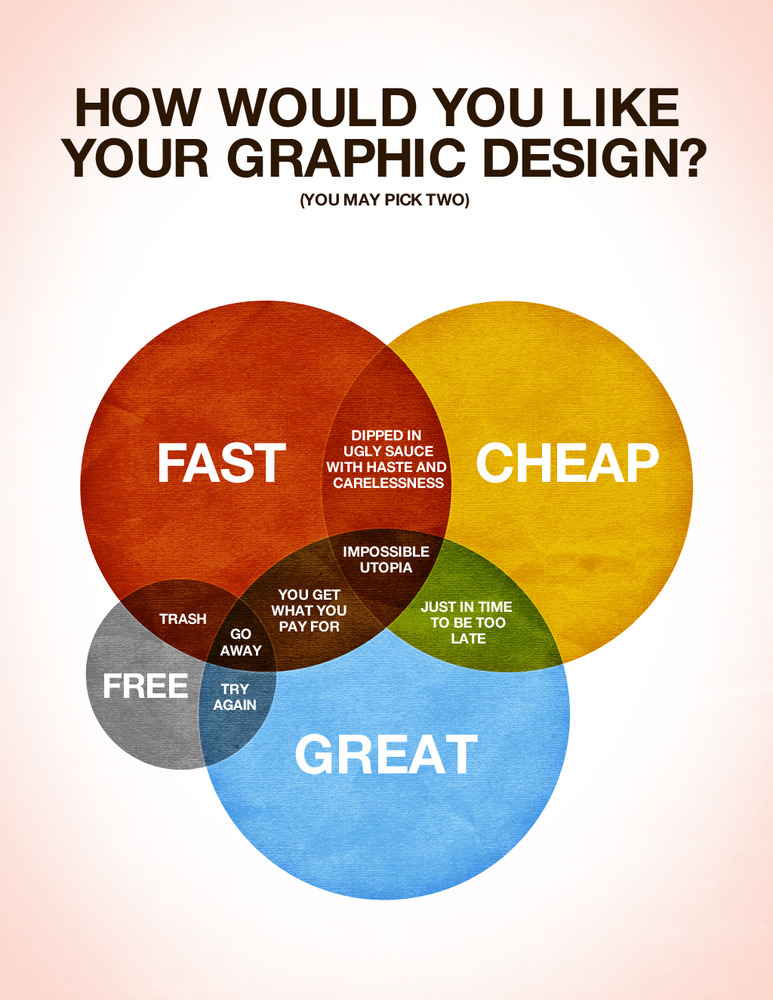
Although not strictly speaking statistics related,  How Would You Like Your Graphic Design? gets an important point across very effectively.

The stupendous language of sport

As part of our Evolving English exhibition, we are running all kinds of related events.

In November I was lucky to be able to watch a recording Just a Minute, the wonderful radio panel game that has been running since 1967. One of my early memories is listening with my granny to Clement Freud and Kenneth Williams.

More recently we hosted an evening devoted to the Language of Sport, which generated some excellent coverage on the BBC – The art of talking a good game. The event was also reviewed on the In bed with Maradona blog.

Not surprisingly much of the talk is about the clichés that surround football commentating, which is related to the live nature of the coverage.

There is a brilliant example from the BBC, of the commentator who ‘went too early’, resulting in over-excited screaming when the ball finally went in the net – The stupendous language of sport.

Then we have Colmanballs, a term coined by Private Eye magazine to describe verbal gaffes perpetrated by (usually British) sports commentators. It is derived from the surname of the now retired BBC broadcaster David Coleman and the suffix -balls, as in “to balls up”.

The Parryphernalia blog has collected a set of amusing misuses of the term literally, which he calls LiterallyBalls.

Here is a short selection:

  • “After the first goal went in you could literally see the Derby players shrinking.” Alan Shearer commenting on Derby’s latest capitulation.
  • “Craig Bellamy has literally been on fire” Ally McCoist.
  • “The Liverpool defence have literally been caught with their trousers down.” Andy Townsend on an Andy Johnson chance against Liverpool.
  • “Koller was literally, literally, right up his backside there.” Andy Townsend again, commenting on Jan Koller’s positioning in the Turkish penalty box.
  • “Terry Venables has literally had his legs cut off from underneath him three times while he’s been manager” Barry Venison.

Last, but by no means least, is the commentating legend that was Alan Partridge. Although a fictional sports reporter on The Day Today, his football commentating contains pearls of English that will stay with us. Here is an example that includes, “he must have a foot like a traction engine”, and “that was liquid football” (a comment I have since heard from real-life commentators).

[youtube=http://www.youtube.com/watch?v=hzSQ3xgoh-w]

Colemanballs is a term coined by Private Eye magazine to describe verbal gaffes perpetrated by (usually British) sports commentators.[1] It is derived from the surname of the now retired BBC broadcaster David Coleman and the suffix -balls, as in “to balls up”,[1][2] and has since spawned derivative terms in unrelated fields such as “Warballs” (spurious references to the September 11, 2001 attacks) and “Dianaballs” (sentimental references to Diana, Princess of Wales). Any other subject can be covered, as long as it is appropriately suffixed by -balls.[1] The all-encompassing term “mediaballs” has since been used by Private Eye as their coverage of gaffes has expanded.[3]

Changes to our company databases in the Business & IP Centre

From the beginning of 2011 we are making some improvements to our company database provision in the Business & IP Centre.

For UK companies we are replacing our Experian B2B service with an updated FAME database produced by Bureau van Dijk Electronic Publishing.

For global company coverage we are replacing Global Reference Solution from Dun & Bradstreet with Orbis (also produced by Bureau van Dijk)

FAME contains information for 7 million companies, while Orbis contains 75 million global companies.

We hope our customers will benefit from our improved service, but I would welcome and comments or suggestions.

Our full list of databases and publications are available on our website.

.______________

A member-owned supermarket on my doorstep

Although I had noticed a new supermarket in Lamb’s Conduit Street passing by on My first ride on a ‘Boris Bike’. I hadn’t realised it was a revolutionary, shopper owned and supported cooperative until I saw it featured in my Springwise newsletter.

Though the first food co-op opened in the UK back in 1844, according to Google, such cooperatives have not been a familiar sight in Europe in recent years, despite a certain popularity in the United States. Until now, that is. In fact, with the recent launch of the People’s Supermarket, Londoners recently gained a new place to find affordable food.

Only members can shop at the People’s Supermarket, but they all get a 10 percent discount on prices as well as a say in how the store is run. In exchange, members pay an annual membership fee of GBP 25, and they also pledge to volunteer four hours of their time per month working as store staff. Because the supermarket’s workforce is nearly all volunteers, staff costs are kept low this way — an advantage that can be passed on in lower prices. Any profits that are earned, meanwhile, get put back into the store to bring down prices even further.

Food co-ops are not uncommon in the US, but it’s interesting to see their reemergence in the UK following a bout of unusually tough times. Could this be the beginning of a widespread comeback…?
http://www.springwise.com

The People’s Supermarket –  Identity Designed is a showcase and forum for those involved in the design of brand identities.

Time Out says:
We’ve followed the slow and steady success of The People’s Supermarket, a carrot-packed co-operative outlet in Bloomsbury. Fighting off Tesco for a site in one of London’s most independently spirited neighbourhoods, The People’s Supermarket is a project close to the heart of celeb chef Arthur Potts-Dawson and ex-Marks & Spencer executive Kate Wickes-Bull.

The duo have rallied the local community into buying into the scheme – literally. Although anyone can shop at the store, full membership (which scores you a 10 per cent discount and a say in how the shop is run) will cost you £25 and four hours per month working in the store. What you get is fresh, locally sourced (when possible) supermarket fare, dirt cheap and airfreight free; new jobs for locals; and all profits going back into the business. For its founders, this is the beginning of a retail revolution – but for us, it’s a genuine alternative to the major supermarkets aggressively taking over our streets.

Though the first food co-op opened in the UK back in 1844, according to Google, such cooperatives have not been a familiar sight in Europe in recent years, despite a certain popularity in the United States. Until now, that is. In fact, with the recent launch of the People’s Supermarket, Londoners recently gained a new place to find affordable food. 

Only members can shop at the People’s Supermarket, but they all get a 10 percent discount on prices as well as a say in how the store is run. In exchange, members pay an annual membership fee of GBP 25, and they also pledge to volunteer four hours of their time per month working as store staff. Because the supermarket’s workforce is nearly all volunteers, staff costs are kept low this way — an advantage that can be passed on in lower prices. Any profits that are earned, meanwhile, get put back into the store to bring down prices even further.

Food co-ops are not uncommon in the US, but it’s interesting to see their reemergence in the UK following a bout of unusually tough times. Could this be the beginning of a widespread comeback…? (Related: Sustainable urban campground to be crowd-funded & managed — Crowdfunded breweries.)

Website: www.thepeoplessupermarket.org
Contact: info@thepeoplessupermarket.org

A role model small business website

Some time ago I was helping Lubna Ahmad who had come into the Business & IP Centre to generate customer contact lists.

She provides hand and foot Reflexology and Indian head massage to corporate and personal clients. As a big fan of Reflexology for nearly ten years now, I was keen to help her promote her business using the web and social media.

As we talked, I could see that not only did she have a well designed and well informed website, she was also making use of Facebook, LinkedIn, Twitter and blogs.

Understanding that many potential customers won’t have heard of Reflexology or Indian head massage, Lubna introduces and explains their benefits:

What is Reflexology?
Reflexology is the technique of applying gentle to firm pressure to the reflexes on the hands or feet in order to bring about a state of deep relaxation, stimulate the body’s own healing processes and help a person return to a state of balance and well-being.  Reflex points in the hands and feet correspond to different parts of the body and by stimulating these points reflexology opens up energy pathways and encourages the body to function efficiently and release any harmful toxins which have accumulated.

What is Indian head massage?
Indian head massage can help to relax, soothe or invigorate the recipient. It is a treatment that involves the therapist using their hands to knead, rub and squeeze the head, neck, shoulders and arms. We use Western Indian Head Massage, which is a dry treatment and does not include the use of oils.

Benefits
For foot reflexology:
– Total relaxation
– A sense of wellbeing
– Improved blood circulation
– Clears the body of toxins
– Balances the body systems
– Preventive healthcare
– Hormonal imbalance
– Back pains
– Moodswings & anxiety
– Digestive disorders
– Fluid retention
and the list goes on!

For Indian head massage:
– Promotes total relaxation
– Gives a sense of well-being & calmness
– Increases blood circulation to the head, neck & shoulders
– Helps stimulate hair growth
– Eases fatigue & improves concentration
– Relieves stiffness in the neck & shoulders
– Helps relieve eye-strain
– Eases headaches
– Aids in detoxification of the body
– Helps with irritability
– Breaks down fibrositic nodules (knots)
– Triggers off endorphins, which creates contentment

Even more impressive was the fact that she had created the impressive website herself (no easy task for the un-initiated). She built her Reflex Space site using the popular free (six million and counting) WIX service, which uses Flash to simplify the process.

In order to remove the WIX adverts you have to pay a monthly fee.  WIX do not host your site, they provide you design tools to help you make it.

Company Partners top ten most common business plan mistakes

Lawrence Gilbert at Company Partners has come up with his top ten most common business plan mistakes.

As someone who spends much of his time helping entrepreneurs develop their business plans, Lawrence has seen many hundreds.

Top ten business plan mistakes

  1. Typos and spellings – it sounds small, but it is a killer. Nowadays there is just no excuse. My own spelling is atrocious, but I use a spell checker all the time. Use a spell checker, proof-read your work, or get a friend to proof-read it. Sloppiness in producing the plan will indicate sloppiness in your business.
  2. Poor structure – again no excuse. There are templates and examples around, we ourselves run business plan workshops and there’s software that will structure it for you.
  3. Executive Summary – people get confused as to what that is. It’s simply a short, punchy, straight-to-the-point summary of all else in the plan. About 2 pages, that is interesting enough and factual enough to almost stand-alone. After reading it, you should want to reach for the phone to contact the author, or at least feel you want to read more in the main plan. Although at the front, it’s the last section to be done.
  4. No contact details on the cover page. Someone reading the plan shouldn’t have to hunt through it for contact details – put them clearly on the cover.
  5. Over hyped – expressions such as “fantastic”, “unique”, “incredible” are meaningless and over-hyping your product or service shows naivety. This is closely coupled to the next point…
  6. Lack of evidence – if you state a market figure, or statistic, try and show where it came from. It gains credibility. Do real market research; don’t just ask friends and family (they don’t count).
  7. No effort made to sell the product/service – the proof of the concept comes when you get sales. There are many, many, good ideas around, but not all of them are commercial. Will customers actually give you their cash for your product? Get out there and make some sales, show it will be bought.
  8. Not using Appendix’s – cluttering up the plan with pages of market statistics is not conducive to having it read. No one will struggle through a badly organised plan, just mention the facts and refer to the full information in the relevant appendix.
  9. No detail to the sales and marketing plan – it’s as though you think that the product/service will sell itself – it won’t. This is often the worse part of the plans we see.
  10. Unbelievable and incomplete financials – We’ve all seen the “hockey-stick” projections, where in the first year the revenues are minimal, but then by golly they shoot up at an incredible rate. Having unrealistic numbers, or incomplete numbers, or contradicting numbers are all plan killers.